
Data-Driven
Digital assays. Reproducible results.
Immunodiffusion assays such as radial immunodiffusion (RID) and Ouchterlony double diffusion require clear image capture, consistent interpretation, and documentation that supports routine laboratory use. Digonaut helps laboratories standardize immunodiffusion imaging and readout workflows with robust technology platforms designed to deliver accurate assay images, reduce variability, and support reproducible analysis.
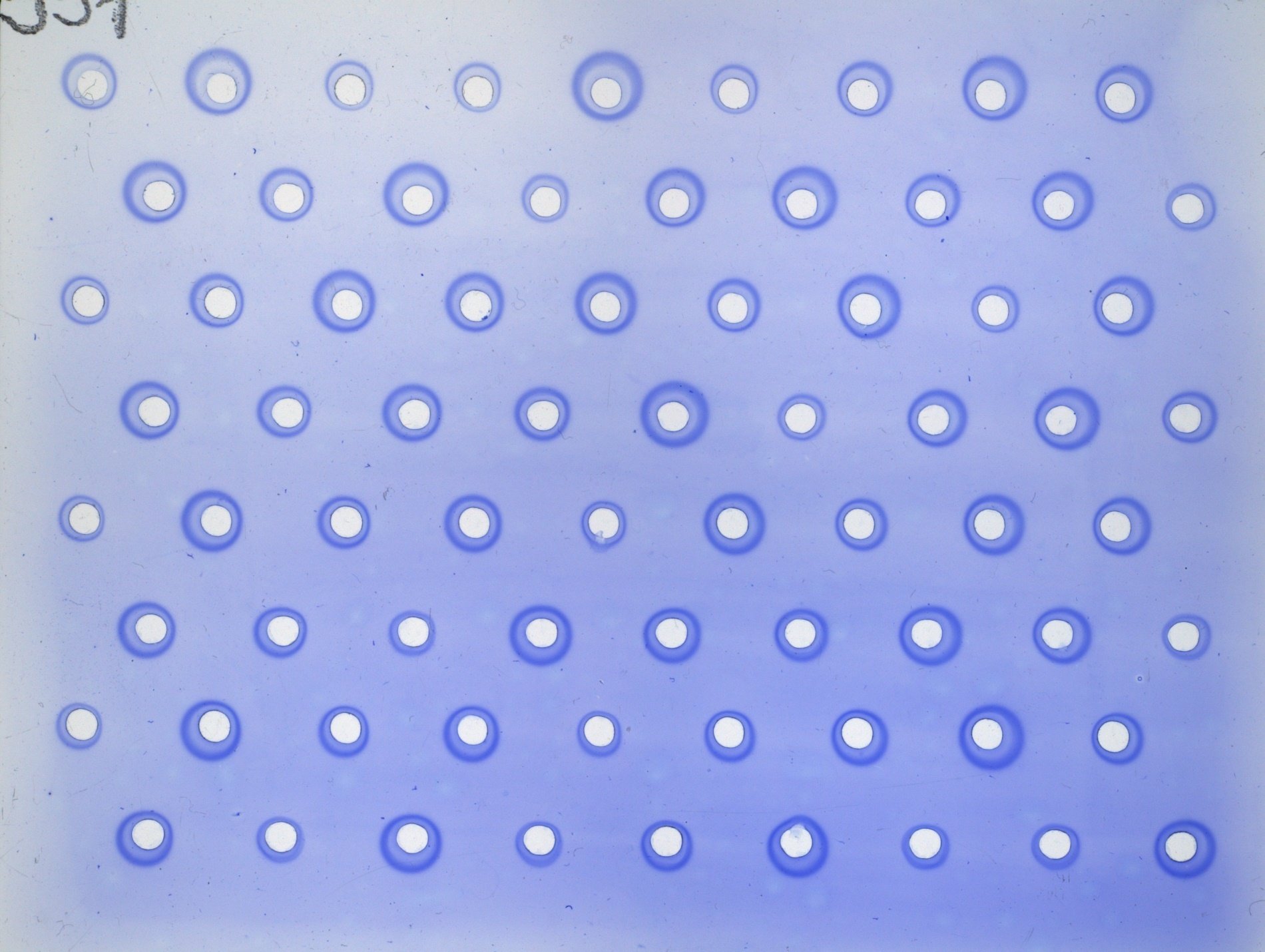
Built for reproducible assays
High-end imaging
Instant clarity. Identify results, make data-driven decisions.
Automated analysis
Automate your reading and analysis from one centralized tool.
4-eye principle
4-eyes principle building on Human-In-The-Loop approach
Explore our key features
Transform RID from a manual assay into a standardized laboratory workflow.
High-precision imaging for immunodiffusion assays
Capture immunodiffusion assays with imaging hardware designed for accurate visual reproduction and reliable measurement support. Clear assay images help laboratories review rings, lines, and diffusion patterns with greater consistency and confidence.
Consistent image acquisition across runs
Saved acquisition settings help teams recreate the same imaging conditions over time. This supports more standardized assay validation and reduces variability between operators, instruments, and repeated runs.
Calibration for reliable image quality
Mean RGB density calibration helps maintain dependable image quality across assays. This supports clearer comparisons and more consistent interpretation when documentation quality matters.
Clear visualization of rings and line patterns
High-quality imaging helps users review diffusion rings and precipitation line patterns with more clarity, making it easier to assess assay outcomes and support confident interpretation.
Structured workflows for routine laboratory use
Immunodiffusion workflows often depend on operator experience and manual review. Digonaut helps laboratories move toward a more standardized process that is easier to document, repeat, and scale.
Shareable parameters across compatible systems
Stored imaging parameters can be reused across compatible systems, helping laboratories align validated conditions between users, instruments, and sites.
Frequently asked questions
What is the difference between RID and Ouchterlony?
RID is commonly used for quantitative analysis by measuring diffusion ring size, while Ouchterlony double diffusion is typically used to compare antigen-antibody relationships by interpreting precipitation line patterns.
How can Digonaut support immunodiffusion workflows?
Digonaut provides laboratory imaging and analysis technology that helps standardize how immunodiffusion assays are captured, reviewed, and documented. The focus is on image quality, repeatability, and workflow consistency.
What are immunodiffusion assays?
Immunodiffusion assays are immunological methods used to detect or compare antigens and antibodies based on their diffusion through a gel medium and the resulting precipitation patterns.
Which immunodiffusion assays can your systems support?
Our imaging approach is suited for immunodiffusion workflows where clear visualization of diffusion rings or precipitation line patterns is important, including RID and Ouchterlony-style assays.
Why is reproducibility important in immunodiffusion imaging?
Differences in lighting, exposure, calibration, and capture setup can affect how rings or line patterns are reviewed and compared. Standardized imaging conditions help laboratories improve consistency and confidence in their results.
Is this suitable for quality-focused laboratory environments?
The technology is designed to help laboratories build more structured, traceable, and repeatable imaging workflows, which is valuable in environments where consistency and documentation are important.
Can this help reduce manual review effort?
Yes. High-quality imaging and more standardized workflows can help users review immunodiffusion results more efficiently and consistently than fully manual approaches.