
Data-Driven
Digital assays. Reproducible results.
Standardize your OPA assays with our intuitive platform and see real results. One technology platform, deep insights, powerful automation.
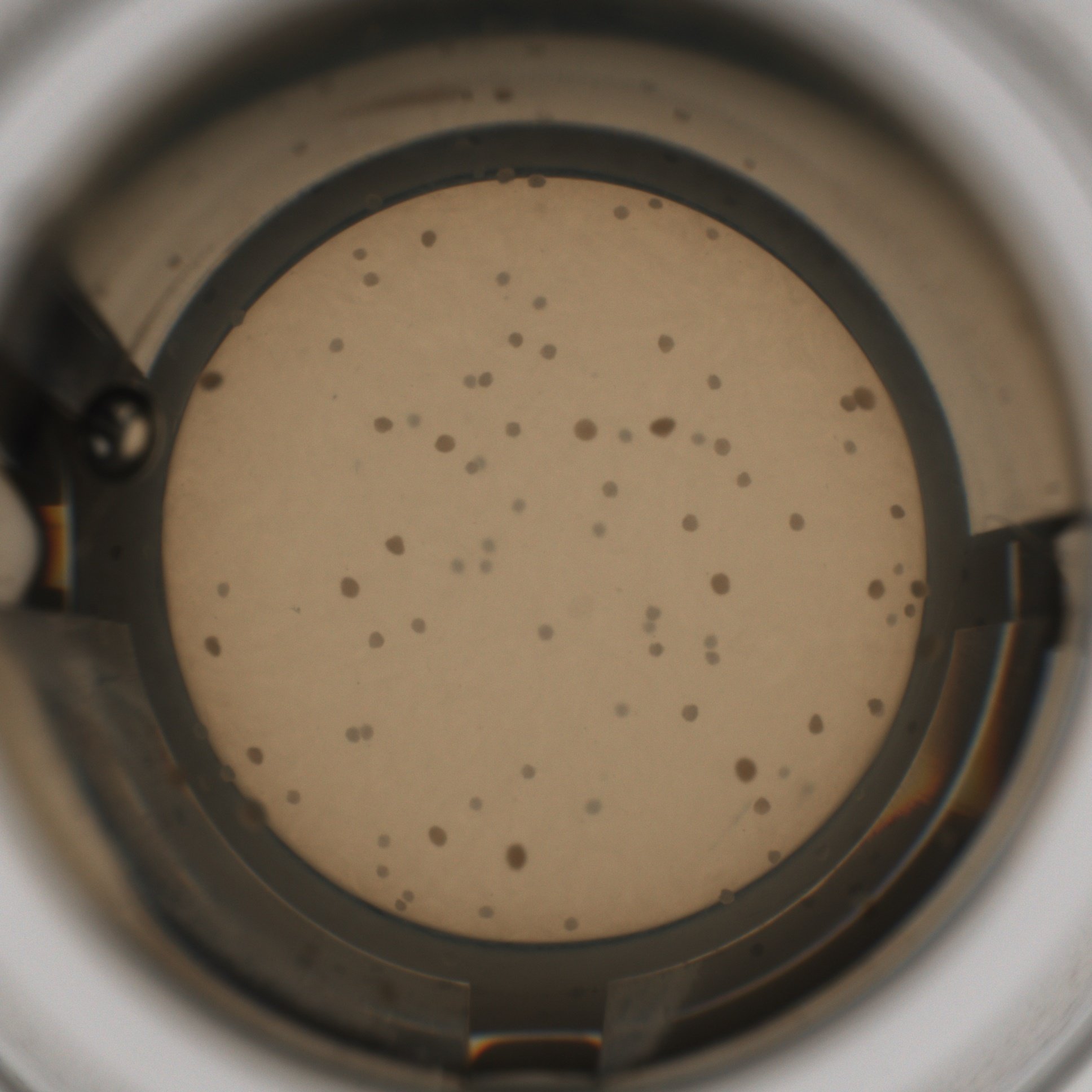
Built for reproducible assays
High-end imaging
Instant clarity. Identify results, make data-driven decisions.
Automated analysis
Automate your reading and analysis from one centralized tool.
4-eye principle
4-eyes principle building on Human-In-The-Loop approach
Explore our key features
Transform SRD from a manual assay into a standardized laboratory workflow.

High resolution imaging
Captures the fine visual detail needed for OPA readout and interpretation.
Optical zoom capability
Enables closer inspection of small assay features and supports more detailed analysis when needed.
Automated colony or cell detection
Reduces manual review by identifying relevant colonies or cells automatically.
Quantification of assay results
Supports consistent measurement and counting for more standardized OPA analysis.
Improved reproducibility
Helps reduce operator-to-operator variability compared with manual readout.
Automation-ready workflow integration
Can be combined with robotic loading, enabling higher-throughput and unattended processing in regulated labs.
21 CFR Part 11 / CSV-ready software architecture
Software and data handling are structured to support computerized system validation (CSV) and Part 11 expectations such as audit trails, user access control, electronic records, and reviewable result documentation.
Cross channel distribution
Manage campaigns across all channels. Maximize your reach.
Frequently asked questions
Why is OPA still difficult to standardize in many laboratories?
OPA workflows often still depend on manual reading, subjective interpretation, and operator-dependent handling. That creates variability between users, slows throughput, and makes it harder to maintain consistent documentation in regulated environments. A digitized imaging workflow helps reduce this variability by standardizing how images are captured, analyzed, and archived.
Why is Macroscan a strong fit for OPA applications?
Macroscan is well suited for OPA because it combines high-resolution imaging with optical zoom, giving laboratories more flexibility to inspect and analyze assay details. For OPA specifically, the platform supports automated colony or cell detection and quantification, which helps reduce manual effort and improve consistency. This makes it particularly valuable where reproducibility and traceable digital records matter.
What does digitization improve in an OPA workflow?
Digitization improves consistency, speed, traceability, and data integrity. Instead of relying on visual interpretation alone, the lab can capture standardized images, apply repeatable analysis rules, store results electronically, and create a reviewable record of how results were generated. In practice, this supports better comparability across runs, operators, and sites.
When is optical zoom especially important in OPA?
Optical zoom is especially important when the workflow requires closer inspection of small or ambiguous assay features, detailed review of colonies or cells, or flexible framing across different assay formats. In those situations, zoom is not just a convenience feature—it supports more reliable interpretation and higher-confidence analysis. For simpler routine readouts, fixed high-quality imaging may be sufficient, but zoom adds important analytical flexibility.
How does Macroscan support GMP-oriented and compliant laboratory workflows?
Macroscan can support GMP-oriented workflows by enabling standardized image capture, consistent analysis procedures, and controlled digital result handling. In a regulated lab, this matters because reproducibility alone is not enough—the system also needs to fit into documented processes, controlled review, and retained electronic records. Positioned correctly, Macroscan is not only an imaging system but a digitization platform for more structured and inspection-ready assay workflows.
What does “21 CFR Part 11 / CSV-ready” mean in this context?
In this context, it means the software environment can be designed to support expectations typically associated with validated computerized systems, such as user access control, audit trails, secure electronic records, controlled result review, and documentation that supports computerized system validation (CSV). This does not mean compliance is automatic out of the box; it means the platform can be configured and documented to align with regulated deployment requirements. That distinction is important when communicating with GMP and quality-focused customers.