
Lifecycle Management
Keep your validated environment reliable, supported, and compatible over time
Digonaut lifecycle management helps pharmaceutical laboratories maintain the performance, availability, and compatibility of their imaging and analysis software throughout its operational life. Our lifecycle services combine qualified engineering support, structured maintenance programs, and long-term software stewardship to reduce disruption and support a standardized process in regulated Windows-based environments.
Whether you are operating in quality control, assay development, or routine laboratory workflows, lifecycle management gives your team a dependable framework for keeping systems current, supported, and ready for continued use.
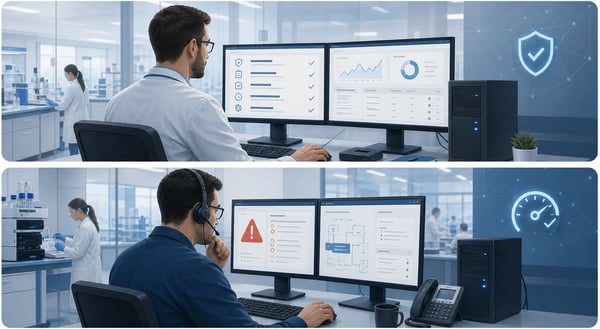
Preventive maintenance
- Scheduled system health checks
- Review of software performance and environment status
- Verification of configuration and key operational settings
- Recommendations for continued reliable operation
- Workflow Automation
Corrective maintenance
When issues occur, Digonaut provides corrective maintenance services to restore system functionality efficiently and with the appropriate technical expertise. Our qualified service engineers investigate root causes, resolve software-related issues, and help return your environment to a dependable operating state.
Corrective maintenance is intended to minimize downtime, reduce operational uncertainty, and support continuity for critical laboratory workflows.
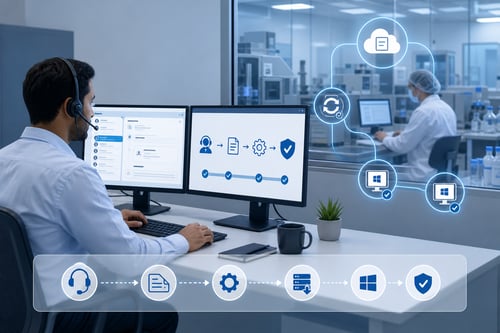
Service desk access
- Incident intake and follow-up
- User support for software-related questions
- Guidance on maintenance and operational issues
- Coordination of technical assistance when escalation is required
Why it matters for pharmaceutical laboratories
In regulated laboratory environments, software maintenance is not only a technical concern. It also affects workflow continuity, reproducibility, and confidence in day-to-day operations. Without a clear lifecycle strategy, organizations may face avoidable interruptions, compatibility issues after operating system updates, or growing support burdens as systems age.
Digonaut lifecycle management addresses these challenges through a platform-driven, lifecycle-focused model that combines robust technology with trusted long-term stewardship. The result is a more stable foundation for assay digitization and laboratory workflow continuity.
What is lifecycle management for laboratory software?
Lifecycle management is a structured approach to maintaining software performance, supportability, and compatibility throughout the operational life of the system. For pharmaceutical laboratories, it helps ensure that software remains reliable, accessible, and aligned with evolving technical requirements over time.
What is included in Digonaut lifecycle management?
Digonaut lifecycle management includes preventive maintenance, corrective maintenance, access to a service desk, and ongoing software maintenance with patch management. Together, these services support continuity, reduce operational risk, and help maintain compatibility in Windows-based laboratory environments.
What is the difference between preventive and corrective maintenance?
Preventive maintenance is planned and proactive. It focuses on system health checks, performance reviews, and early identification of risks before they affect daily operations. Corrective maintenance is reactive and is delivered when an issue occurs, with qualified service engineers working to diagnose the problem and restore stable system performance.
Why do pharmaceutical laboratories need lifecycle management?
Pharmaceutical laboratories depend on stable, reproducible, and supportable software environments. Without a structured lifecycle approach, organizations may face increased support burdens, compatibility issues after operating system updates, and avoidable interruptions to critical workflows. Lifecycle management helps create a more dependable foundation for long-term operational continuity.